Practical
A day on the Princes' Islands
From the Kadıköy waterfront it's a short hop across the Sea of Marmara to an archipelago with no cars, a lot of pine, and a century of wooden mansions. It is the easiest big day out the quarter has, and most people leave it too late in the trip.
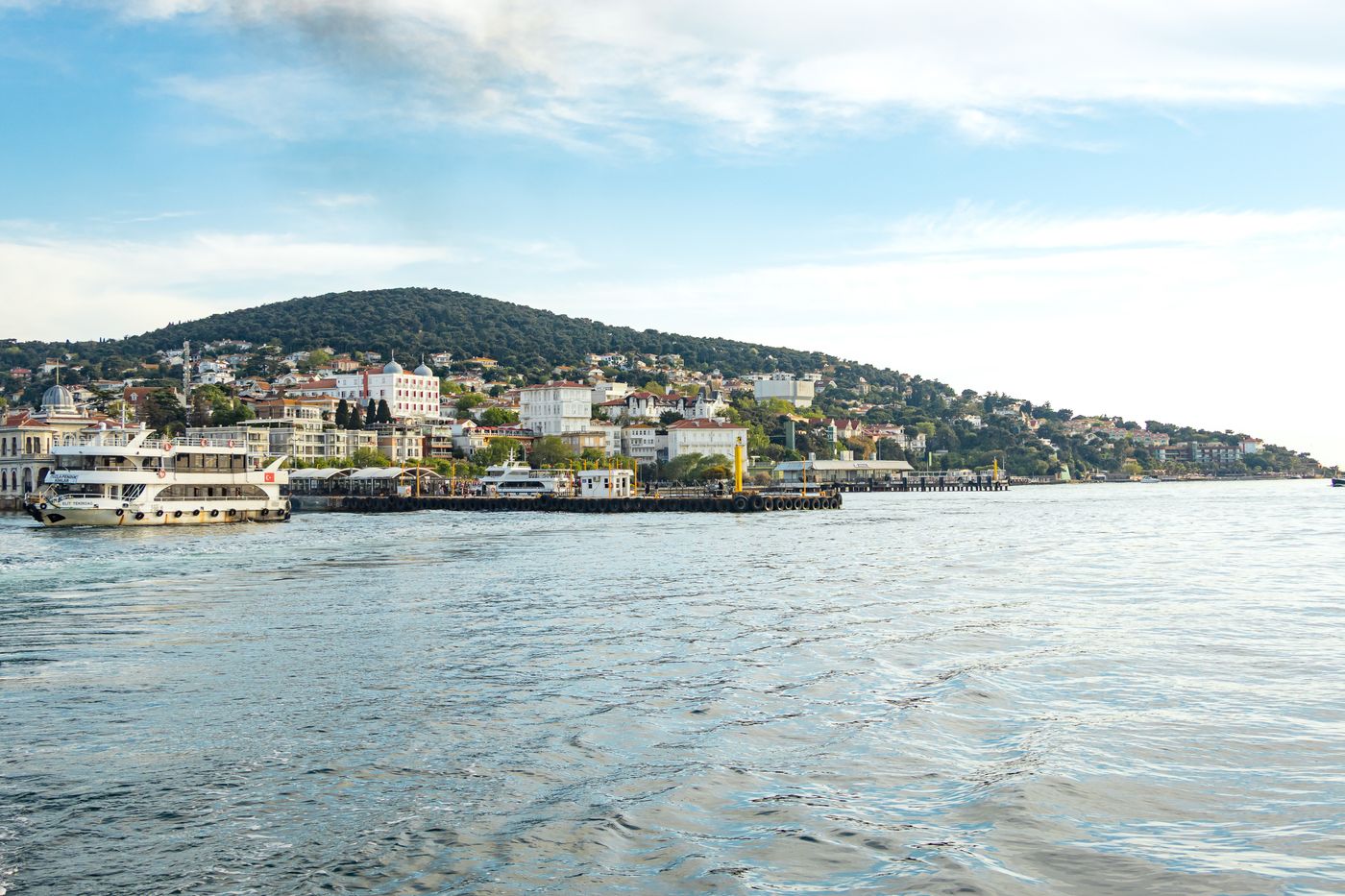
On a clear day you can see them from the Kadıköy shore, a low green smudge out past the shipping lanes. Turks call them the Adalar, "the islands," as if there were no others worth the word. The archipelago has nine; four have year-round residents and a ferry stop. You can be standing on one of them, under a pine, an hour after you leave the market.
Getting on the boat
Ferries leave from the Kadıköy terminals and from Bostancı, a little further down the Asian coast. Two kinds run the route. Slow public boats operated by Şehir Hatları are the cheap, unhurried option, with open decks and tea sold from a tray. Faster catamarans cut the crossing roughly in half. Depending on which boat you catch and which island you want, the trip runs between 25 minutes and an hour, and Büyükada is usually the last stop on the chain, so reaching it takes longest of all.
Pay the way you pay for everything else in the city: tap an İstanbulkart at the turnstile. No paper ticket, no booth, no queue if you already have the card loaded. The boats fill from front to back on weekends, so if you want a seat on the seaward side, get there early and turn right as you board.
Read the board before you sit down. Departure boards list both the slow and fast services and they don't alternate neatly. The last return of the day is the number that matters most, especially out of season when the timetable thins. Photograph it on the way out. Missing the final boat back means an expensive private water taxi or a night you didn't plan.
Which island, and why it matters
People say "the islands" as one place and then spend the day on whichever one the boat reaches first. That's a mistake. They are genuinely different, and which one suits you depends on what you want from the afternoon.
Büyükada is the biggest, at around five and a half square kilometres, and the grandest. This is where the great wooden köşk mansions stand shoulder to shoulder behind their gardens, paint peeling in the salt air, verandas sagging just enough to look romantic rather than derelict. It is also the busiest by a distance. Come on a July Sunday and you'll share the front with half of Istanbul.
Heybeliada is my pick most days. Smaller, greener, hairier with pine forest, and noticeably calmer. The old Naval Cadet School sits above the jetty, a reminder that these islands trained officers and exiled princes long before they hosted day-trippers. The flat shore road and the forest tracks make it the best island for a rented bicycle. Heybeliada rewards aimlessness more than Büyükada does.
Burgazada is smaller still and quietly literary. Writer Sait Faik Abasıyanık lived here and set much of his work on the island; his house is now a small museum, and the place has the unbothered feel of somewhere that has read a few books and doesn't need to prove it. Kınalıada is closest to the city, the first stop on the line, with a long Armenian heritage and a reddish, balder landscape than its pine-heavy neighbours. It gets the least attention, which is part of its appeal.
If you only have one day and you want the postcard, take Büyükada and climb the hill. If you want to actually relax, get off a stop earlier at Heybeliada and rent a bike. I've done both wrong on the same weekend.
No cars, and what replaced the horses
What makes the islands feel like a different decade is the absence of traffic. Private motor vehicles are banned across the Adalar — only service vehicles run — so there is no engine noise, no horns, none of the constant negotiation that walking the rest of Istanbul demands. You hear bicycle bells, gulls, and your own footsteps on the stone.
For more than a century the islands' image was the horse-drawn phaeton, the open carriage that clopped tourists around the hills. Those are gone. In 2020 the carriages were phased out after a serious equine disease tore through the horses, and the decision stuck on animal-welfare grounds. Electric minibuses and carts took their place. Purists mourn the carriages; the horses, by every honest account, are better off.
So getting around now means three things: your own legs, a rented bicycle, or one of the electric vehicles that loop the islands and grind partway up the steeper climbs. Bikes are the obvious choice on Heybeliada and the flatter stretches. On Büyükada, where the hill is real, plenty of people take an electric cart up and walk the rest.
The hill on Büyükada
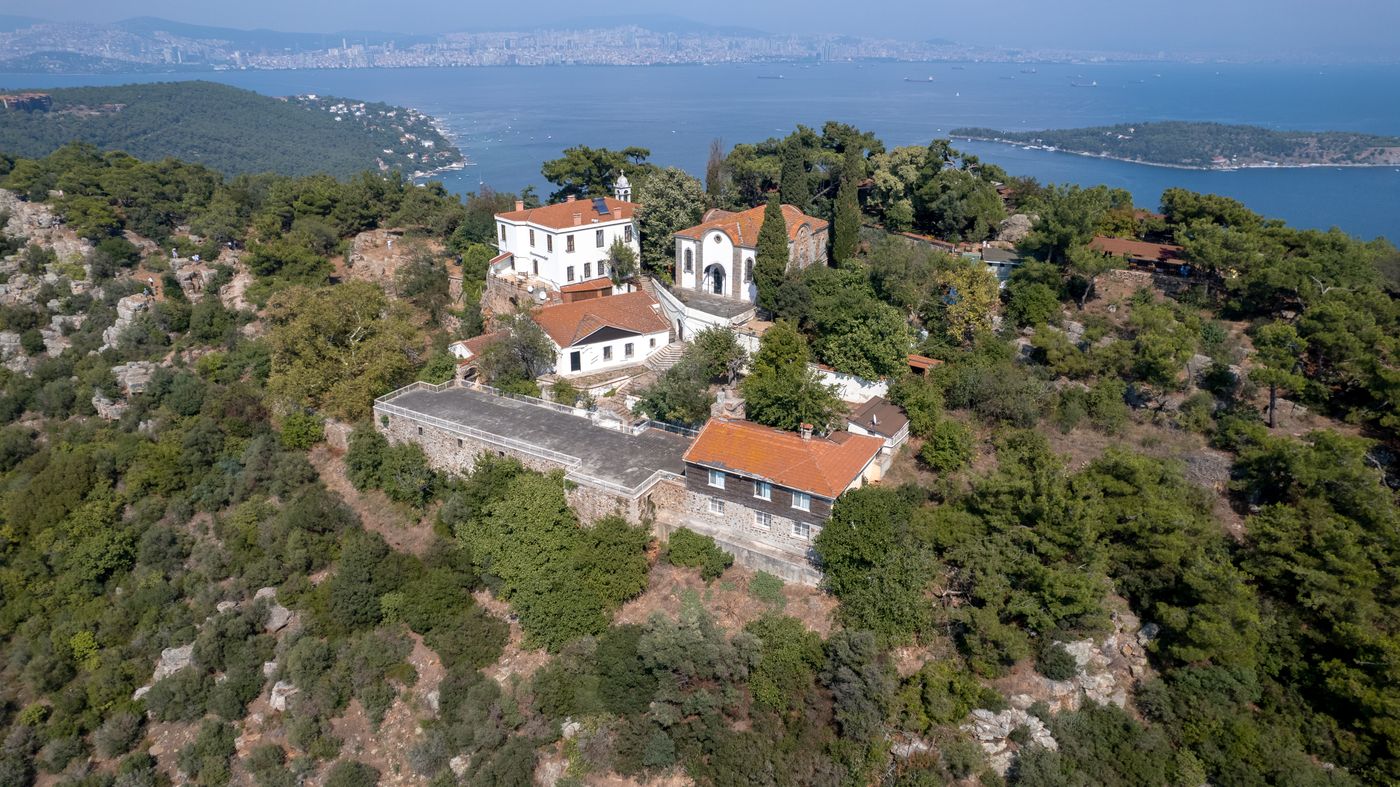
Büyükada's set piece is the climb to Aya Yorgi, the monastery of St George, on the island's southern peak. You can take an electric cart to the foot of the final stretch, but the last push is on foot up a steep, switchbacking path. Ribbons, thread, and strips of cloth are knotted along the route to the railings and branches — a wish tradition that long ago outgrew any single faith. People come up here to ask for things.
At the top the view earns the sweat. The Sea of Marmara spreads out below in three directions, the other islands float in the haze, and on a clear day the whole sprawl of Istanbul lines the far shore. There's a small church and a café where a cold drink has never tasted better. Go up in the late afternoon, when the light turns gold and the day-trip crowds have started drifting back to the boats.
Lunch, swimming, and doing very little
All four harbours line up the same way: fish restaurants along the front, tables half in the shade, a row of meze on ice in the window. It is not cheap and it is not a secret, but eating grilled fish by the water with a glass of something cold is most of the point of coming. Prices climb with the view, so walk a street back from the absolute waterfront if you'd rather not pay for the postcard with your lunch.
In summer the islands are a swimming destination as much as a sightseeing one. Büyükada and Heybeliada both have beach clubs with sunbeds and an entry fee, plus scrappier free coves if you'll scramble down to them. The water is clean, cool, and a relief after the climb. Bring a towel and more water than you think you need.
The Princes' Islands at a glance
| Island | Character | Best for |
|---|---|---|
| Büyükada | Largest, grandest mansions, busiest | The view from Aya Yorgi; the big day out |
| Heybeliada | Pine forest, the old naval college, calmer | Cycling and an unhurried afternoon |
| Burgazada | Small, literary, low-key | A quiet lunch and a writer's house |
| Kınalıada | Closest in, Armenian heritage, sparse | Beating the crowds entirely |
Times, money, and a hat
None of this needs booking. Ferries are turn-up-and-go, the bike shops rent by the hour at the jetties, and the restaurants don't take reservations for lunch. What the day does need is a little planning around two things: when you go, and what you carry.
When. A weekday in late spring or early autumn is the islands at their best — warm enough to swim, quiet enough to enjoy. Summer weekends are the opposite: packed boats, a crush along the front, the charm buried under day-trippers. If a summer Saturday is your only window, take the earliest boat you can stand and a less obvious island.
What. Water, sunscreen, a hat, and shoes you can climb in. There is real sun and real hill, and the shade thins as you leave the harbours. An İstanbulkart with enough balance covers the round trip and your transport for the day; keep some cash for the smaller cafés and the bike shops.
Then check that last boat again, subtract twenty minutes for the walk back to the jetty, and forget about it. The islands are the rare Istanbul day where the plan is mostly to not have one.