Practical
Getting around the Asian side
One contactless card runs ferries, metro, buses and the undersea rail. And from Kadıköy, the part you'll actually use day to day is your own two feet.
Here is the short version, in case you read no further. Get an İstanbulkart, walk almost everywhere inside Kadıköy and Moda, and save the metro or the ferry for the longer hops. That covers most of what a visitor does here.
Because the map looks intimidating and mostly isn't. The Asian side has fewer lines than the European one, which turns out to be a relief: from Kadıköy you get one metro line, the rail under the strait, a fan of ferries, a couple of trams and the buses. You learn the lot in a day.
The card that does everything
The İstanbulkart is one contactless smart card that pays for ferries, the metro, the tram, city buses, the Marmaray and the funiculars. No zone map to decode, no separate ticket per mode. You tap, it takes the fare, you carry on.
You buy and reload it at the squat machines in metro stations and at every ferry terminal, plus the small kiosks and corner shops showing the blue logo. Machines take cash and cards and switch to English. Load a sensible amount at the start; topping up at a barrier with a queue behind you is the one bit of friction in an otherwise smooth system. The official network and current fares live on Istanbul's transport authority site, and the card has a thorough write-up on Wikipedia.
Two things make it better than it first appears. Linked journeys are discounted, so changing from a ferry to the metro within the transfer window costs less on the second tap. And one card can tap several people through the same barrier, one after another, so a pair or a small group needs only a single card between them.
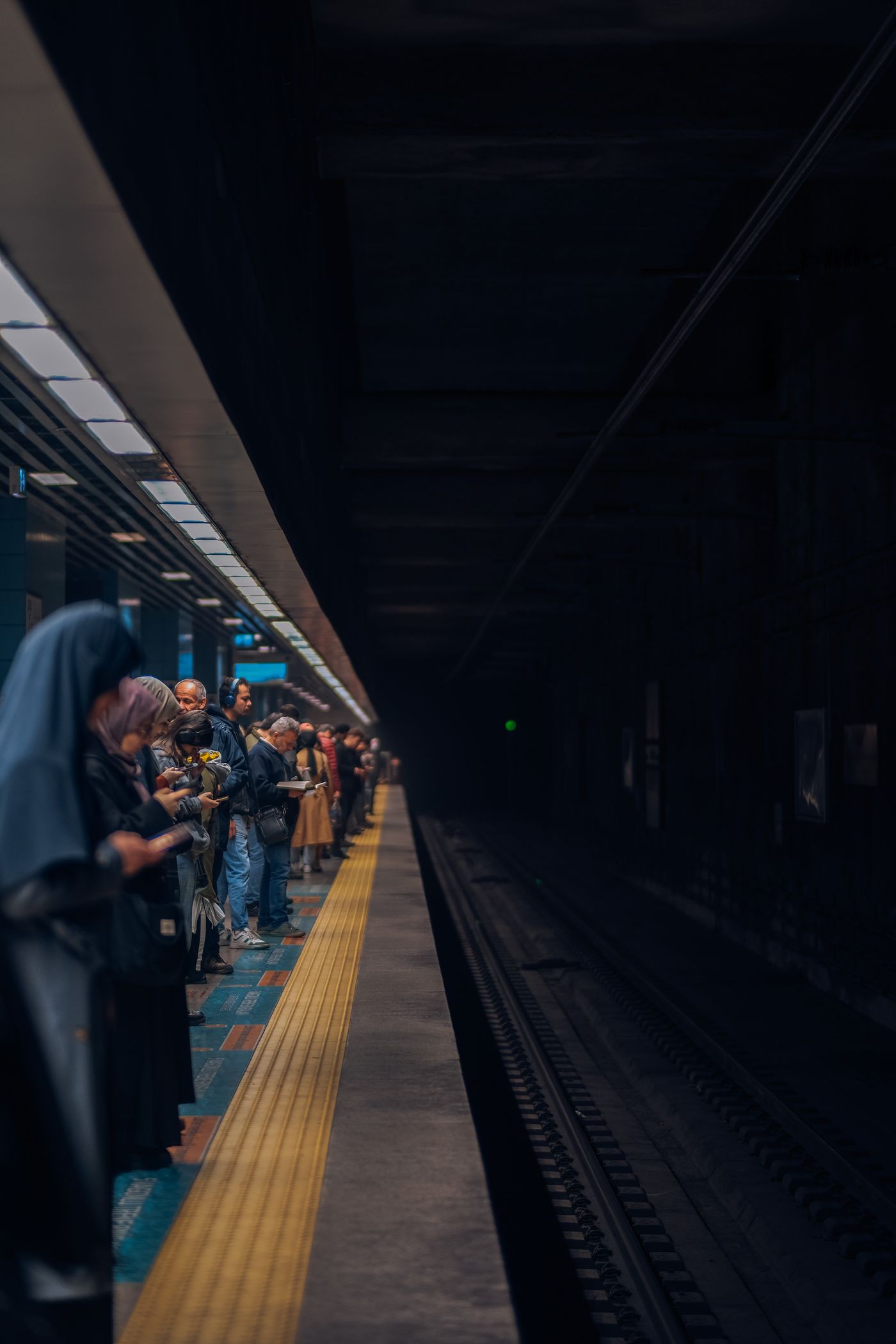
Three habits worth keeping. Keep a buffer on the card so you never meet a low balance at a turnstile. Tap on every time, and on the Marmaray tap out at the far end too, or you're charged the maximum fare. And dodge the crush: roughly 08:00–10:00 and 17:00–19:30 are when trains and ferries fill.
The M4, the only metro you need
Kadıköy sits at the western end of the M4 metro line, and that single fact does a lot of the heavy lifting on this side of the water. It runs east from the Kadıköy terminus through the Anatolian suburbs, past Pendik to its far end at Tavşantepe, and reaches Sabiha Gökçen, the Asian-side airport. If your flight uses that airport, the metro carries you most of the way into the quarter without touching a road.
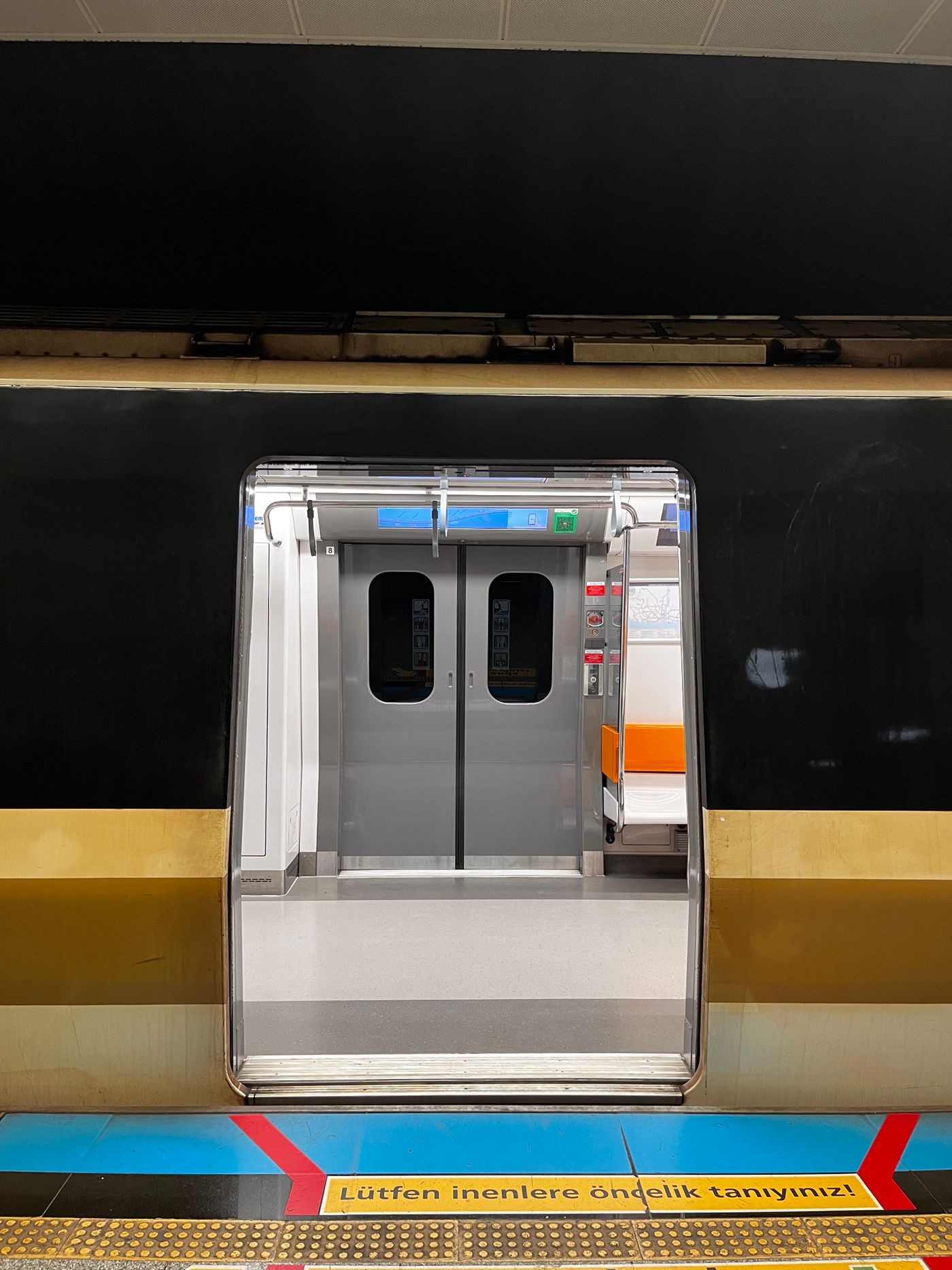
It's clean, frequent and signed in English as well as Turkish, with modern carriages and trains every few minutes for most of the day. Kadıköy station sits a short, level walk from the ferry piers and the top of the market, so the handover between water and rail is easy.
Stand on a ferry deck, watch the European skyline drift past, step off, walk three minutes, and you're on a metro heading for the airport. That sequence never stops feeling like a magic trick.
Under the Bosphorus on the Marmaray
The Marmaray is the commuter railway that runs under the Bosphorus in an immersed tube, linking the Asian and European shores by rail for the first time in the city's history. From Kadıköy you reach it in one stop on the M4, changing at Ayrılık Çeşmesi where the two lines meet.
Why bother, when the ferry across is one of the great urban journeys anywhere? Weather, mostly. A ferry is a joy in spring sun and a test of character in a January gale, whereas the Marmaray runs fast and dry whatever the strait is doing. Cross by boat when the day is kind, and keep the train for the early starts, the late nights and the days the wind is up.
The crossing is undramatic in the best way: you're in a tunnel, so there's no view, just a couple of minutes of dark and a station on the far continent. The drama is all in knowing where you are.
Every mode, at a glance
If you'd rather have it on one screen, here it is. None of it needs memorising; it's just the shape of the choices.
| Mode | Good for | Pay with | Note |
|---|---|---|---|
| Ferry | Crossing to the European side, the islands, the view | İstanbulkart | The best ride in the city; weather-dependent. |
| M4 metro | The airport, Pendik, the eastern suburbs | İstanbulkart | Kadıköy is the western terminus. Fast and frequent. |
| Marmaray | Crossing the strait in any weather, early or late | İstanbulkart | Change at Ayrılık Çeşmesi. Tap out as well as in. |
| Moda tram (T3) | A slow loop and a photograph | İstanbulkart | Charm, not transport. Walking is usually faster. |
| City bus / dolmuş | The coast road and outer neighbourhoods | İstanbulkart (bus); cash on a dolmuş | Useful once you leave the walkable core. |
| Taxi / app | Late nights, luggage, awkward corners | Cash, card or in-app | Insist on the meter, or book through an app. |
The Moda tram is a treat, not transport
That red-and-white tram you'll photograph is the T3, a heritage loop that trundles around Moda and back toward central Kadıköy. It is lovely. It is also slow, and the loop is one you can stroll in less time than it takes the tram to come round.
Ride it once for the pleasure of it, then walk. The history of these nostalgic tramways is genuinely charming, and the car has the rattle and ring of something restored rather than reconstructed. A small attraction on rails, not a way from A to B.
Nobody who lives here takes the Moda tram to be somewhere on time. They walk, or take the metro. The tram is for visitors and slow Sundays, which is exactly what makes it nice.
Buses, dolmuş and the suburbs
For anything beyond the walkable core, the buses fill in the gaps. They cover the long coast road and the neighbourhoods behind it, and they take the İstanbulkart like everything else. Stops show route numbers; the only awkward part is knowing which one you want, so check a map app before you set off.
Then there's the dolmuş, the shared minibus that runs a fixed route and leaves when it's full rather than to a timetable. You flag it, squeeze in, pass your fare forward hand to hand, and call out when you want off. An occasional tool rather than a daily habit, but a local piece of street choreography.
Why you'll mostly just walk
Here's the part the transport maps don't tell you. Inside the quarter you barely need any of the above. Almost everything that makes Kadıköy worth the trip sits within a fifteen-minute walk of the ferry piers.
Market, fish stalls, record shops, tea gardens, the sea wall at Moda, the good places to eat: walkable, all of it, on flat or gently rolling streets. This neighbourhood was built at human scale and never lost it. You tap your card to arrive and to leave, and wander in between, which is the right way to take Kadıköy anyway.
Taxis and the meter argument
You won't need taxis often, but late at night, in the rain, or with luggage, they earn their keep. Istanbul's yellow taxis are metered by law, and the only rule that matters is to see the meter running before you move. If a driver waves it away and quotes a flat figure, find another car.
Cleaner still is to order through an app. BiTaksi and iTaksi both hail a licensed taxi to your spot and handle the route and fare in-app, which removes the haggle and gives you a record of the trip. For a short hop after the metro winds down, that's the least stressful option.
None of this should worry you. By big-city standards, getting around here is gentle once the card is in your pocket. Buy it, keep it topped up, tap on every time, and the Asian side opens up.