Moda
Moda's cafés and ice cream
Walk ten minutes south of the market and the noise drops away. Moda is the part of Kadıköy built for sitting still, a cone in one hand and nowhere in particular to be.
The market end of Kadıköy is loud in the good way: fishmongers shouting prices, the clang of the simit cart, people three-deep at the pickle shop. Moda is the opposite, and it is only a short walk away. The streets get leafier, the buildings turn into handsome old apartment blocks with wrought-iron balconies, and the soundtrack thins out to birds and the occasional bicycle bell. This is where locals come to do very little, and they take it seriously.
I treat Moda as an afternoon rather than a list of sights, because that is what it is good for. There is no monument to tick off. The point is the pace.
The leafy streets
Moda Caddesi is the spine. It runs down from the busier part of Kadıköy toward the sea, and it is lined with cafés, ice-cream counters, small bookshops and the kind of homeware stores that sell one beautiful kettle in the window. The side streets off it are where the neighbourhood actually lives. Plane trees lean over the road, cats own the doorsteps, and the cafés spill a few tables onto the pavement under awnings. It is residential first and a destination second, which is exactly why it stays pleasant.
You feel the shift in your shoulders. The market keeps you alert; Moda lets you slouch.
The ice cream, and the queue
If Moda has one institution, it is the ice cream. Dondurma, the Turkish version, is its own thing, and the long-running parlour everyone names is Ali Usta. It has been scooping on the same patch for decades, and on a warm evening the line runs out the door and down the pavement. That queue is half the experience. You shuffle along reading the flavour board, change your order twice, and watch everyone else walk off looking pleased with themselves.
What draws people is the sheer number of flavours, dozens of them, rotated with the seasons. Some are the classics you would expect. Others are oddly specific and very good: fig, sour cherry, melon when it is in, a pistachio that earns the markup. I usually fail to be adventurous and order two scoops I have had before. No regrets.
If the line looks brutal: it moves faster than it looks, because the staff have done this a few thousand times. But Moda has other good ice cream too. You will pass several counters on the same street, and on a hot day none of them are bad. The queue at Ali Usta is a choice, not a tax.
What makes it stretch
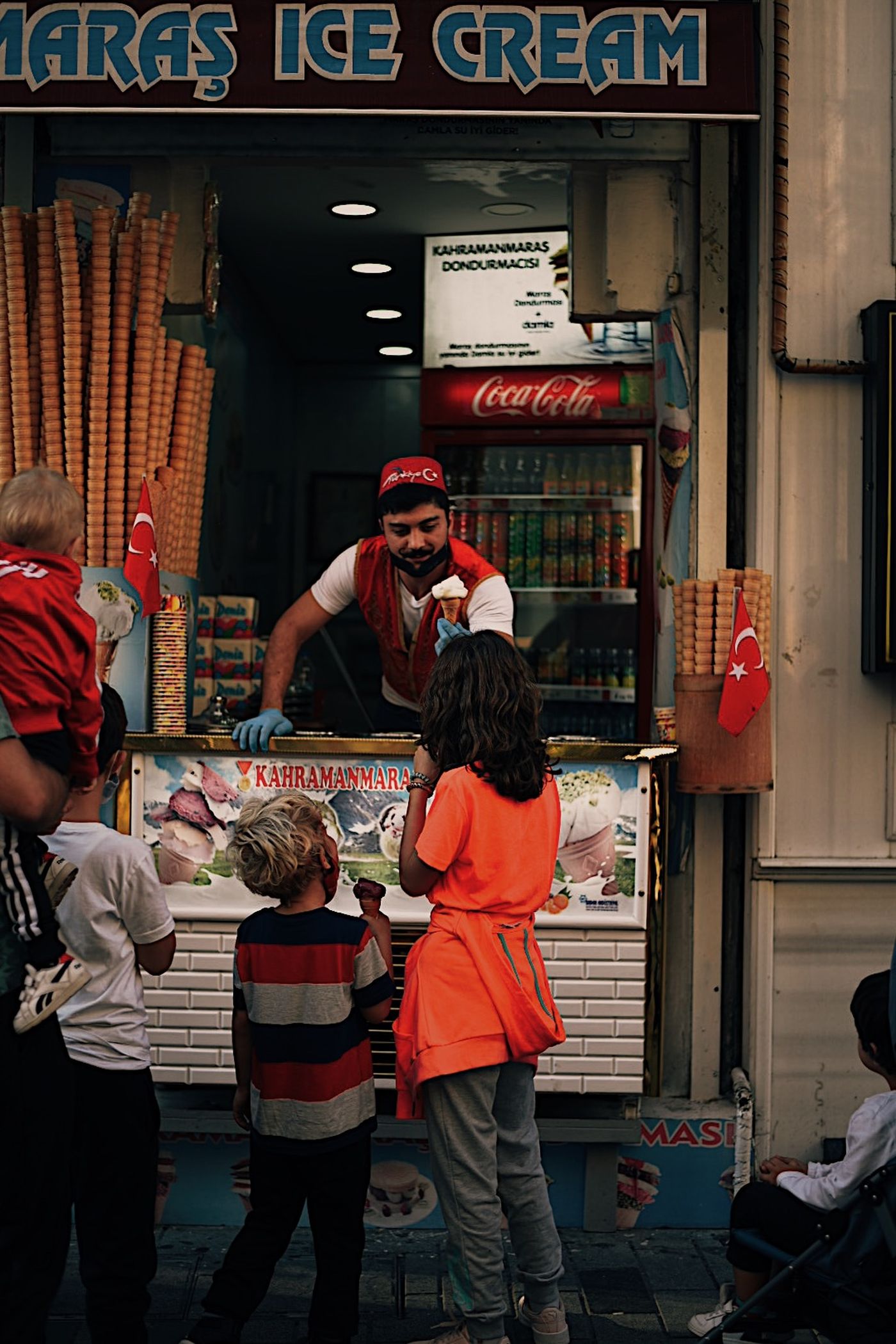
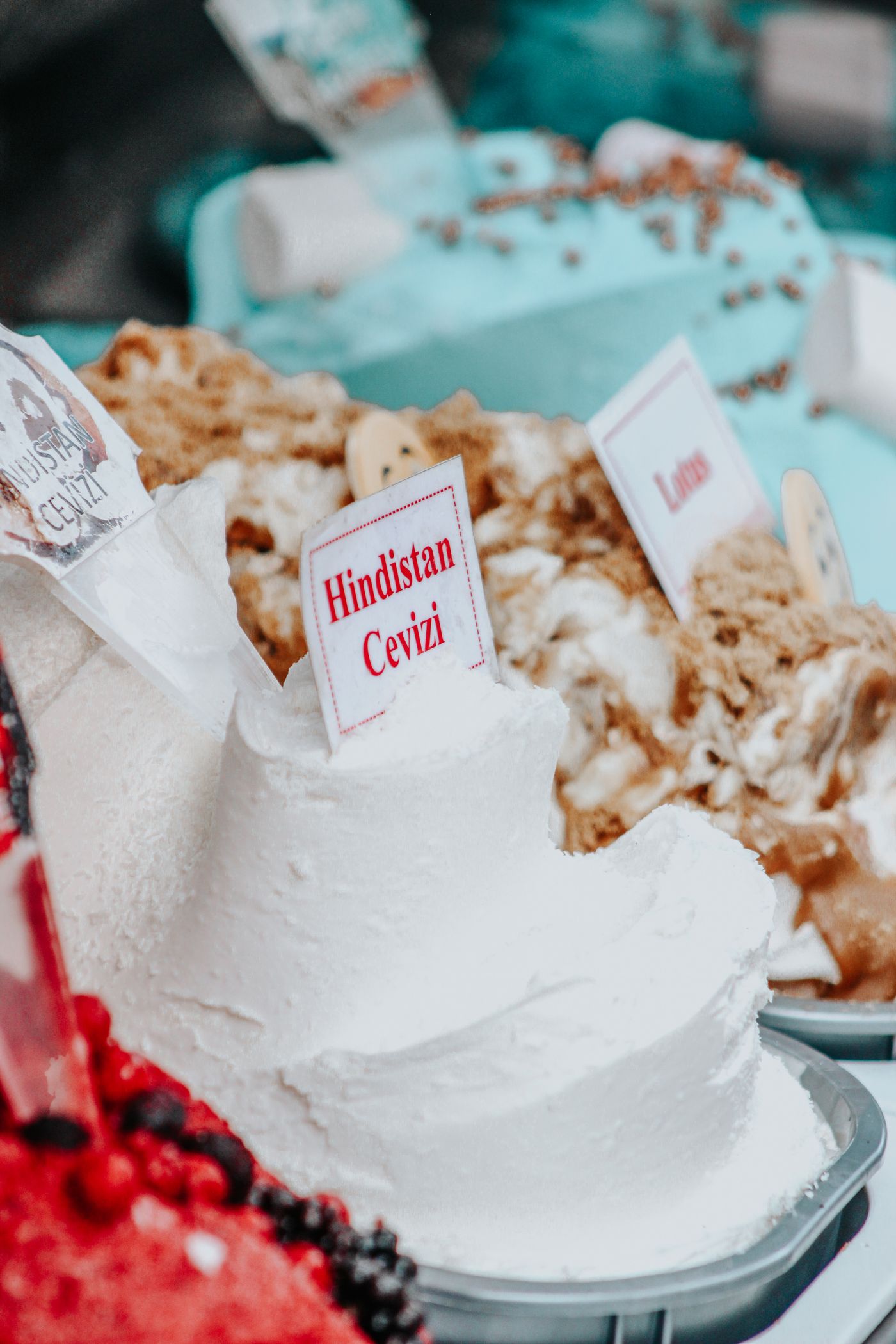
Turkish ice cream behaves differently to the Italian gelato most visitors know, and the reason is two ingredients. One is mastic, a resin that gives it a faint chew. The other is salep, a flour ground from wild orchid tubers, which is what makes the proper stuff so thick it can be served on a stick and stretched like dough. The most theatrical version comes from Kahramanmaraş in the south, and you have probably seen the street performance: the vendor flips the cone, hides it, hands you an empty one, then produces the real thing with a flourish.
At a neighbourhood parlour in Moda you get less showmanship and more substance. Texture is the tell. It does not collapse into a puddle the second the sun hits it. It holds, dense and slightly elastic, and it is genuinely a different dessert.
The old pastaneler
Ice cream gets the headlines, but Moda's quieter pleasure is the pastane, the Turkish patisserie. These are the old-school dessert shops with a chilled glass case along one wall and a few marble tables, and they have been doing the same things well for a long time. The case is a study in milk and sugar.
What to look for, roughly in the order I would eat it:
- Sütlaç — baked rice pudding, the top blistered brown, best slightly chilled.
- Kazandibi — a caramelised milk pudding with a scorched base, faintly chewy, a little smoky. Strange the first time, then you crave it.
- Profiterol — the Turkish take buries the little choux puffs under a heavy chocolate sauce. More pudding than pastry, and unapologetic about it.
- Künefe — shredded pastry over melting cheese, soaked in syrup and served hot. Not strictly a Moda speciality, but plenty of places do it, and it is worth ordering for two.
None of this is delicate. Turkish desserts commit. That is the appeal.
The honest order in a Moda pastane is one milk pudding and a tea, eaten slowly while the afternoon does nothing in particular. Everything else is showing off.
Bookshops, coffee and corner tea
Between the sweets there is plenty to drink. Moda has a real bookshop-café streak, the kind of place where you can nurse a coffee at a small table with a wall of secondhand paperbacks behind you and nobody minds how long you stay. There is also a strong specialty-coffee crowd here now, flat whites and single-origin pour-overs, which I get into properly over in the Kadıköy coffee piece.
And then there is the most Istanbul option of all: the corner çay ocağı, the tea hatch, where a small tulip glass of black tea costs almost nothing and the plastic stools sit straight on the pavement. This is where the neighbourhood actually meets. You do not go for the tea so much as for the sitting.
My way of doing it: coffee or breakfast first, a long walk down toward the water, then ice cream on the way back when the light goes gold. If you are building a whole morning around it, I lay out the full breakfast case in the Turkish breakfast guide, and the seafront stretch in Moda by the sea.
The little tram
You cannot spend an afternoon in Moda without meeting the tram. That single antique carriage, line T3 on the nostalgic tramway, trundles a slow loop through the neighbourhood and back. It is charm dressed as transport. Nobody really rides it to get anywhere, because walking is faster and the loop is short, but it rings its bell, the locals wave it past, and it is genuinely lovely to watch ding its way around a corner under the plane trees.
Ride it once for the novelty, then walk like everyone else.
How to spend the afternoon
Here is the shape of a good one, loosely. None of it needs booking and the whole thing flexes around the weather.
| Roughly when | What | The idea |
|---|---|---|
| Early afternoon | Coffee on Moda Caddesi | Grab a pavement table, watch the street wake up after lunch |
| Mid afternoon | Wander the side streets | No route. Follow the trees and the cats toward the sea |
| Late afternoon | A pastane stop | One milk pudding and a tea, sitting down properly |
| Golden hour | Ali Usta, then the shore | Join the queue, take the cone down to the water |
That is the entire plan, and it is better for being thin. Moda is not a place you conquer. It is a place you let unspool, with something sweet melting before you finish it. When you are ready for the louder, hungrier side of the quarter again, it is all waiting a few streets back in the market.